
An efficient small business contract workflow moves a document through five clear stages: intake, drafting, approval, signature, and storage or renewal, with automation carrying the file between each one. The fastest improvement most businesses can make is combining intake forms with e-signature, so customer answers auto-populate the contract instead of getting retyped by hand. A form-native tool like Ksign is built around exactly that sequence.
TL;DR:
- Automating the intake form and electronic signature process can significantly cut contract cycle times, especially by eliminating manual data entry and follow-up.
- Conditional approval routing, reusable templates, and automated reminders address key bottlenecks that delay approvals and signatures, streamlining the workflow.
- Focusing on a single contract type for initial automation allows a small business to measure improvements before expanding to more complex document types.
- Integrating signing tools with invoicing and CRM systems minimizes duplicate data entry and improves record accuracy across business operations.
- Using form-native workflows like Ksign enables quick deployment of repeatable contracts that automatically generate, get signed on mobile, and trigger payments in one session.
Table of Contents
- What a small business contract workflow actually looks like
- Common bottlenecks and how automation removes them
- What to look for when choosing a contract workflow tool
- A step-by-step plan to fix your contract workflow
- Security, recordkeeping and legal basics you can’t skip
- A practical example: form-native workflows in action
- Compliance considerations specific to small businesses
- Version control and collaboration: keeping one source of truth
- Connecting contract tools to the rest of your business software
- The one change that actually moves the needle
- How Ksign fits into this workflow
- Sources
- FAQ
What a small business contract workflow actually looks like
Contract workflow describes the path an agreement takes from first request to signed, stored record. It is the operational backbone behind every quote, service agreement, waiver, or client onboarding pack a business sends out. Some call this contract lifecycle management, though for a small business it rarely needs the weight that phrase implies.
The stages are consistent across industries, even if the documents differ:
- Intake or request: a customer or staff member submits the details that trigger the contract.
- Draft or generate: those details populate a template or get manually written into a document.
- Review and approval: someone checks pricing, scope, or legal terms before it goes out.
- Signature and payment: the customer signs and, often, pays a deposit.
- Storage, renewal, and analytics: the signed file is filed, tracked, and flagged before it lapses.
Small businesses typically bleed time at the second and third stages. Manual copying from an intake email into a Word template, and approvers who sit on a document for days, are the two biggest drags on efficient contract processes.
Common bottlenecks and how automation removes them
Most delays trace back to four specific failures, and each has a direct automation fix.
- Approval routing sits with the wrong person. Conditional logic can route a contract to a senior approver only above a set value, and skip that step for routine jobs.
- Drafting starts from a blank page. Reusable templates and clause libraries mean staff assemble a document instead of writing one from scratch.
- Approvers get forgotten. Automated reminders and SLA tracking chase signatures without a staff member manually following up, and every action lands in an audit trail.
- Form answers get retyped into contracts. Auto-fill removes the manual copy-paste step that introduces errors and eats an afternoon.
Contract automation software works by stripping out these manual steps, whichever one is actually slowing the business down, rather than digitising the whole process at once, according to a comparison of contract automation tools.
Pro Tip: Before buying any tool, time your current process for one contract type, start to finish. That single number tells you whether your bottleneck is drafting, approval, or chasing signatures, and it stops you buying features you don’t need.
What to look for when choosing a contract workflow tool
A small business doesn’t need every feature an enterprise platform offers. It needs the right six.
- Form builder and intake portals. The tool should turn a customer’s answers directly into contract fields, not just collect them for someone to transcribe.
- Template library with dynamic fields. Look for reusable clauses that adjust automatically based on contract type, service, or price.
- Approval routing with conditional logic. Rules should route by value or category, with automatic reminders when a document stalls.
- Legally binding e-signature with audit trail. Every signature event needs a timestamp, IP record, and retained access to the signed document.
- Payment collection built into signing. Deposits and invoices should be collectable in the same session as the signature, not a follow-up email with a separate link.
- Mobile-friendly interface and simple pricing. Field staff need a workflow that works on a phone, and pricing that doesn’t punish growth with per-envelope or per-user fees.
Whichever dimension is prioritised should match where your own process is actually losing time, because the right feature depends on your bottleneck, not on a vendor’s feature list.
A step-by-step plan to fix your contract workflow
Small businesses that improve their contract process fastest do it in stages, not one big rollout.
- Map the current process. Write down every step a contract goes through today, including who touches it and how long each handoff takes. Time it once from request to signed document.
- Pick one contract type as your pilot. Choose the highest-volume, lowest-complexity document, a standard service agreement or quote, not your most complicated custom contract.
- Build the intake form first. Converting the first customer touchpoint into structured data often delivers the fastest time savings, because it removes manual transcription at the very start of the chain.
- Design templates and approval rules. Keep branching logic simple. Assign one owner per approval step with a clear turnaround expectation.
- Train the team and run a short pilot. Two to four weeks is usually enough to surface friction points before a full rollout.
- Gather feedback and adjust. Fix the template wording, approval thresholds, or reminder timing based on what actually happened, not what you assumed would happen.
- Roll out and monitor. Track cycle time, signature completion rate, and late renewals monthly, then expand to the next contract type once the first is stable.
Starting small matters more than it sounds. Buying an enterprise contract lifecycle management platform before piloting a single workflow is one of the most common mistakes small businesses make, since over-buying adds configuration time without adding early benefit.
Pro Tip: Pick one cycle-time metric, request to signed, and measure it before your pilot starts. It’s the only number that tells you whether the new workflow actually worked.
Security, recordkeeping and legal basics you can’t skip
Electronic signatures carry the same legal weight as ink for most business transactions in the United States. The ESIGN framework confirms this, but it also sets conditions: certain consumer transactions require affirmative consent to receive records electronically, plus demonstrable access to those records afterward. Skipping that consent step on a consumer-facing contract can undermine its enforceability.
Beyond signature validity, three practices protect a small business:
- Keep a documented retention policy. Every signed contract needs a defined storage period and a clear audit trail showing who signed, when, and from where.
- Treat contractual security obligations as part of contract review, not an afterthought. NIST guidance for small businesses recommends documenting and tracking legal, regulatory, and contractual cybersecurity requirements using a simple asset inventory or checklist, rather than assuming a client’s data-handling clause won’t matter later.
- Know when to call a lawyer. High-value contracts, unusual liability terms, or anything involving regulated data are worth a professional review before signing becomes routine.
A practical example: form-native workflows in action
Picture a cleaning business quoting a new client. A guided form captures the property size, service frequency, and access details, and those answers auto-populate the service agreement instead of someone drafting it manually. The client signs on their phone and pays a deposit in the same session, closing the job before they’ve put the phone down.
That is the practical shape of a form-native contract workflow:
- Guided intake forms remove manual drafting by feeding answers directly into contract fields.
- E-signature and payment happen together, so a signed job is a paid job.
- Mobile-first design suits field crews who quote and close on-site, not from a desk.
Compliance considerations specific to small businesses
Compliance obligations for contracts don’t disappear because a business is small. They just get overlooked more often, usually because no one owns the task.
Industry-specific rules apply regardless of headcount. A clinic collecting patient consent, a recruiter handling candidate data, or a tradesperson working under an insurer’s preferred-contractor terms all carry obligations baked into the contracts themselves. Insurers, for instance, set specific requirements around documentation and liability cover before approving a contractor for claims work, and missing one of those clauses can cost the job.
Data handling is the area most small businesses underestimate. If a contract mentions storing customer payment details, health information, or other sensitive data, that clause creates an ongoing obligation, not just a one-off promise. Assessing what a contract actually commits the business to, before it’s signed, matters more than assessing it after a dispute.
Record retention rules vary by industry and contract type. Some service agreements need to be kept for years after completion for warranty or liability reasons; others expire in relevance quickly. Building retention periods into the storage stage of your workflow, rather than deciding case by case, avoids both premature deletion and unnecessary clutter.
Finally, review consent and disclosure language on every consumer-facing template. A generic contract template pulled from the internet may not meet the disclosure standard your specific transaction requires, particularly around electronic delivery and payment terms.

Version control and collaboration: keeping one source of truth
The most common contract dispute inside a small business isn’t with a client. It’s an internal argument over which version of a document is actually current.
Every contract template should have a single owner responsible for updates, and every edit should be dated and logged rather than saved as “final_v3_reallyfinal.docx” in someone’s inbox. That sounds obvious until you’ve watched two staff members send a client different pricing because they each edited a separate copy of the same quote.
A few habits prevent this:
- Lock finalised templates. Once a clause library or standard agreement is approved, restrict who can edit the master version.
- Track changes at the field level, not the document level. Knowing that a discount clause changed matters more than knowing “the contract was edited”.
- Centralise storage. A shared, cloud-based repository beats scattered local files or email attachments, because it removes the question of which copy is authoritative.
- Separate template edits from live contract edits. Changing a master template shouldn’t silently alter contracts already sent for signature.
Collaboration breaks down fastest when approval and drafting happen in different tools, an email thread for negotiation, a separate signing platform, a spreadsheet for tracking status. Consolidating those steps into one workflow, even a simple one, removes most of the version confusion small teams run into.
Connecting contract tools to the rest of your business software
A contract workflow that sits in isolation from your CRM or accounting software creates duplicate data entry, and duplicate data entry creates errors.
When a signed contract triggers an invoice automatically, instead of someone re-entering the agreed price into accounting software by hand, that’s one less place for a mistake to creep in. The same logic applies to CRM records: a client’s signed agreement date, contract value, and renewal date are useful data for sales and account management, not just for the filing cabinet.
The integrations worth prioritising depend on where your team currently duplicates work. If your bookkeeper manually raises an invoice after every signed job, connecting signing to invoicing removes a manual step and a delay. If your sales team tracks deals in a CRM separately from where contracts get signed, syncing contract status back to that CRM keeps the sales pipeline accurate without a second system to check.

Field service and trade businesses benefit from a slightly different integration: connecting job scheduling or dispatch software to the contract and signature step, so a completed job automatically triggers the paperwork rather than requiring someone to remember to send it. Field service platforms built for plumbing, HVAC, and electrical work show this pattern clearly, linking job data to the documentation it generates.
The goal isn’t integrating everything at once. It’s removing the one duplicate entry point that currently costs your team the most time each week.
The one change that actually moves the needle
Most small businesses trying to fix their contract process reach for a full platform overhaul first. That’s backwards. The single highest-leverage change is converting your intake, the very first form a customer fills out, into structured data that feeds directly into a contract, rather than into an inbox someone reads later.
I’d also caution against buying enterprise-grade contract lifecycle management software before you’ve piloted anything. It adds configuration overhead you don’t need yet, and it delays the benefit you’re actually chasing. Pick one contract type, automate its intake and signature, measure the cycle time, and only then decide what to add next.
— Josh
How Ksign fits into this workflow
Ksign is built around the exact sequence this article describes: a guided form collects the details, those answers generate the contract, the client signs, and payment gets collected in the same session. It skips the step where someone retypes form answers into a Word document, which is usually where a small business’s contract process loses the most time.
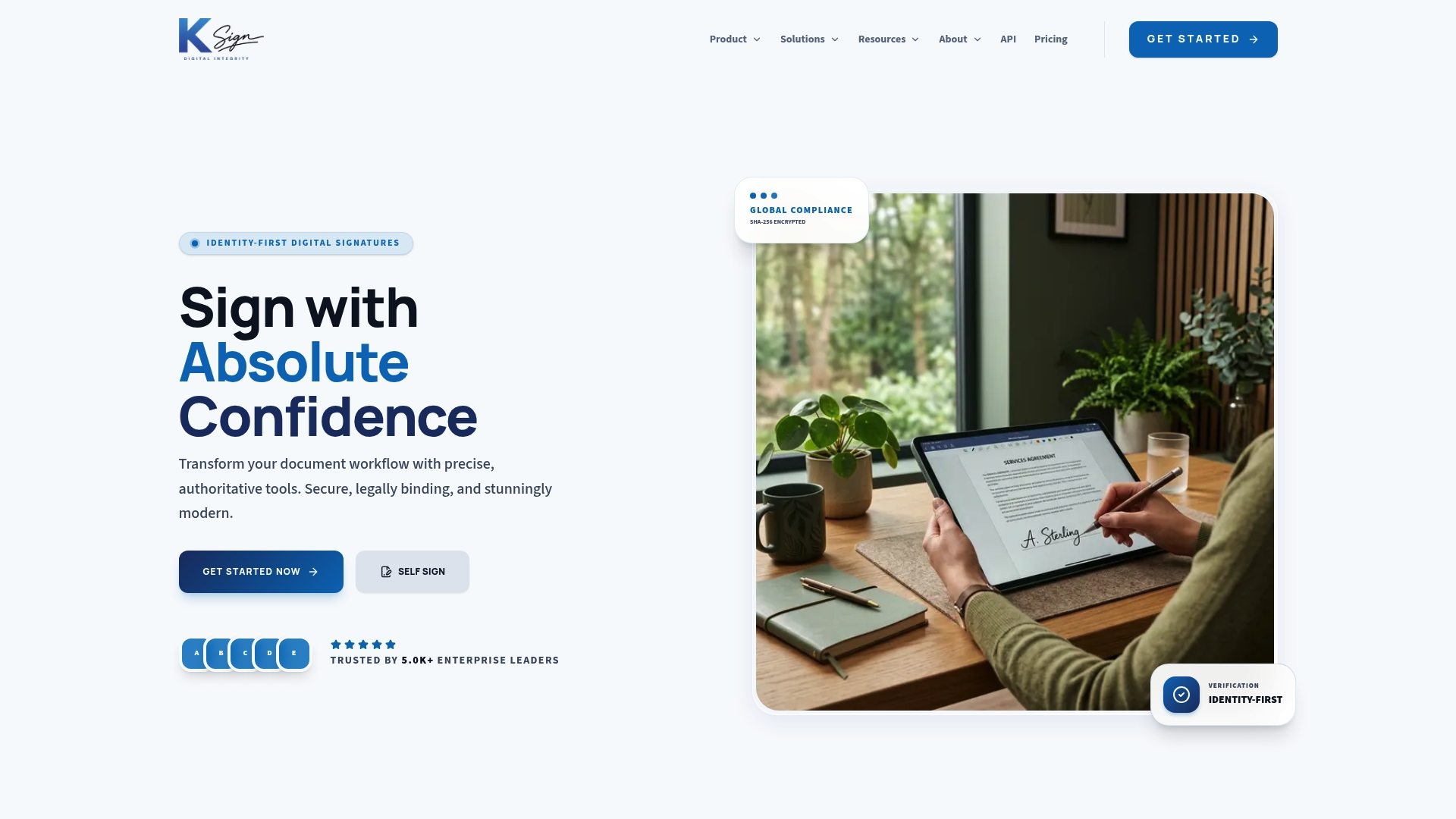
If your business already has a high-volume, repeatable contract, a standard service agreement, a quote, a consent form, that’s the right place to pilot. Ksign’s contract automation turns that document into a form-driven workflow, and its payment collection closes the job without a separate invoice link. Plans run from the Standard tier at $24 per seat per month, with a Professional tier at $40 for teams that need more. Start with one contract type, time the cycle from request to signed, and check the pricing page to see which tier matches your team’s size before you scale it across the rest of your paperwork.
Sources
- NIST CSWP 50: Small Business Cybersecurity: Non-Employer Firms (initial public draft)
- Electronic signatures in global and national commerce act: consumer consent provision (FTC report)
- Contract automation software 2026: 9 tools compared
- Contract approval workflow software | Automate contract approvals (Snifty Contracts)
FAQ
What are the 7 rules of a contract?
There’s no single official list, but most legal guides point to the same core elements: offer, acceptance, consideration, mutual intent to be bound, capacity, legality, and clear terms. A contract missing any of these, say, one party lacked the legal capacity to sign, risks being unenforceable, which is exactly why an approval step reviewing terms before signature matters.
What is the best workflow software for small businesses?
The best option depends on where your process actually breaks down: drafting, approvals, or chasing signatures. A form-native platform like Ksign suits businesses that need to turn customer intake directly into a signed, paid contract in one mobile-friendly flow, particularly trades and service businesses collecting deposits at sign-off.
What is contract workflow?
Contract workflow is the path an agreement follows from initial request through drafting, approval, signature, and storage or renewal. Automating the handoffs between these stages, especially intake and signature, is what turns a slow, email-based process into one that closes in minutes rather than days.
Can I draw up my own contract?
Yes, small businesses can draft their own contracts for most standard transactions, provided the terms are clear and both parties have the legal capacity to agree. For anything involving unusual liability, regulated data, or high contract value, a legal review before it becomes a template is worth the cost.