
An editable bookkeeping engagement letter template is provided below, ready to copy and adapt for monthly bookkeeping or one-off cleanup work. It includes the core clauses practices rely on for assurance and clarity: scope of services, fees, client responsibilities, confidentiality, termination, and a signature block. You can send it for e-signature and store the signed copy alongside your client records for future reference.
TL;DR:
- List every included task and explicitly exclude tax preparation, audit support, and advisory work unless separately agreed in writing; vague scope invites disputes.
- Separate the recurring monthly fee from any cleanup project, and state payment dates, deposits, hourly rates for extra work, and late payment terms.
- Clients should provide bank statements, receipts, payroll records, and software access by a fixed cutoff, such as the fifth business day; late records delay deliverables.
- Set a written notice period, such as 30 days, and specify that completed records and reports will be delivered within 10 business days after termination.
- Reconfirm the signed terms at least annually, especially when fees, services, or software access change, rather than relying on an outdated agreement.
Table of Contents
- Full bookkeeping engagement letter template you can copy
- Clause-by-clause plain-language explanation and copy-ready phrasing
- Concrete fee and billing clause examples you can copy
- What clients must provide and how to phrase access and document obligations
- Sample wording for term, renewal and termination
- How to accept signatures and record acceptance
- Pre-send checklist to confirm the engagement letter is ready
- Practical tips from the publisher and how a form-native workflow helps
- Why engagement letters matter and how to start using one
- KSign: turning your engagement letter into a signed, paid workflow
- FAQ
- Sources
Full bookkeeping engagement letter template you can copy
Below is a complete, fillable template. Replace the bracketed fields with your firm’s and client’s details, then adjust the scope and fee sections to match the engagement you have agreed.
[Your Firm Name] [Your Address, Phone, Email]
Date: [Date]
To: [Client Name / Business Name] Re: Engagement Letter for Bookkeeping Services
Dear [Client Name],
This letter confirms the terms of the bookkeeping services we will provide to [Client Name] (“the Client”), beginning [Start Date].
1. Objective and Scope of Services We will provide the following bookkeeping services: [bank and credit card reconciliation, accounts payable and receivable tracking, monthly financial statement preparation, payroll processing support, sales tax filing support]. Services not listed here, including tax preparation, audit support, or financial advisory work, fall outside this engagement unless agreed separately in writing.
2. Fees and Billing Our fee for ongoing monthly bookkeeping is [amount] per month, billed on the [1st/15th] of each month via [ACH, credit card, bank transfer]. [Optional: A one-time cleanup fee of $amount applies to bring historical records up to date before monthly services begin.]
3. Client Responsibilities The Client agrees to provide [bank statements, receipts, payroll records, access to accounting software] by the [5th] business day of each month.
4. Confidentiality We will keep all Client financial information confidential, except where disclosure is required by law.
5. Term and Termination This engagement begins on [Start Date] and continues monthly until either party provides [30] days’ written notice of termination.

6. Signatures Accepted and agreed by: ______________________ Date: ________
For firms that want optional clauses, consider adding data access provisions (read-only bank feeds, accounting software seat access), a late-fee schedule, or a separate catch-up project statement of work. A sample insertion for software access reads: “Client grants [Firm Name] view-only or user-level access to [QuickBooks Online / Xero] for the duration of this engagement.”
- Draft the letter in Google Docs or Word for easy editing and version tracking.
- Export a PDF copy before sending so the formatting stays locked for signature.
- Use an e-signature workflow that timestamps acceptance and stores the signed file automatically, so you are not chasing scanned copies by email.
Once the template fits your standard offering, save it as a master copy and duplicate it for each new client rather than rebuilding it from scratch every time.
Clause-by-clause plain-language explanation and copy-ready phrasing
Each clause in a bookkeeping engagement letter does a specific job. Professional guidance from the AICPA recommends documenting agreed terms in a signed letter and treats illustrative engagement letters as a baseline for the profession, with re-confirmation at least annually considered best practice.
- Objective and scope: list the exact tasks you perform, such as “monthly bank reconciliation, categorisation of transactions, and preparation of a profit and loss statement.” Vague scope language is the most common source of client disputes.
- Fees and billing: state the fee structure plainly, for example “$450 per month, due on the 1st, auto-charged to the card on file.”
- Client responsibilities: specify what happens when records arrive late, such as “work may be delayed by the number of days records are outstanding, with no change to the monthly fee.”
- Confidentiality and data handling: a concise clause works best, for example “we will not disclose Client financial records to any third party without written consent, except as required by law.”
- Limitations and exclusions: state clearly that bookkeeping does not include tax advice, audit assurance, or legal opinions, and that the Client should engage a tax preparer or attorney for those services.
Pro Tip: Keep each clause to two or three sentences. A letter a client can read in under five minutes gets signed faster than one that reads like a legal brief.
Concrete fee and billing clause examples you can copy
The fee clause carries the most weight for avoiding payment disputes, so the wording should match how you actually bill. Sample engagement letter templates, including the one published by EAK Accounting Services, commonly separate a one-time cleanup project from ongoing monthly bookkeeping, each with its own fee and payment terms.
- Flat monthly fee: “Client authorises [Firm Name] to charge $[amount] to the card or bank account on file on the [1st] of each month for the duration of this engagement.”
- Hourly billing: “Services outside the agreed scope are billed at $[rate] per hour. We will notify the Client before performing additional work exceeding $[threshold].”
- One-time cleanup project: “A cleanup fee of $[amount] applies to bring records current through [date], payable as a $[amount] deposit before work begins and the balance upon completion.”
- Late payment: “Invoices unpaid after [15] days incur a $[amount] late fee, and services may pause until the account is current.”
Separating the cleanup estimate from the recurring retainer, with its own deposit, keeps scope and cash flow predictable on both sides. For practices billing larger projects in stages, the progress billing approach used in construction, where payment ties to milestones rather than a single invoice, offers a useful model worth adapting, as described in this progress billing overview.
What clients must provide and how to phrase access and document obligations
Scope creep usually starts with vague language about what the client owes you. Spell out documents and access requirements in plain terms.
- Documents: bank and credit card statements, receipts for business expenses, payroll reports, and prior-year tax returns if relevant.
- Software access: read-only or user-level access to accounting platforms such as QuickBooks Online or Xero, plus bank feed connections where applicable.
- Timing: records delivered by a fixed cut-off, such as the 5th business day of the following month, with monthly deliverables delayed proportionally when records arrive late.
- Retention: state how long you retain source files after the engagement ends and how records are returned, consistent with IRS recordkeeping guidance on retaining supporting documentation.
Sample wording for term, renewal and termination
Clear exit terms protect both the practice and the client when a relationship ends.
- Effective date and term: “This engagement begins on [Start Date] and continues on a month-to-month basis unless terminated as described below.”
- Notice period: “Either party may terminate this engagement with [30] days’ written notice.”
- Final deliverables: “Upon termination, we will deliver all completed financial records and reports through the last paid period within [10] business days.”
- Disengagement steps: issue a final invoice, transfer files to the client’s chosen format, and revoke any software or bank feed access granted during the engagement.
How to accept signatures and record acceptance
A valid acceptance needs a clear signature block and a record of when and how it was signed.
Copy-ready block: “By signing below, the Client agrees to the terms outlined in this engagement letter.” Followed by signature, printed name, title, and date lines for both parties.
- Confirm the requestor’s identity and email before sending for signature.
- Capture a timestamp and audit trail automatically rather than relying on a scanned signature page.
- Store the signed PDF in the same folder or system as the client’s working files.
- Where a deposit applies, collect it in the same session as the signature so onboarding does not stall waiting on a separate invoice.
Pro Tip: Combining signature and deposit collection into one-step removes the awkward follow-up email asking a new client to “please pay before we start.”
Pre-send checklist to confirm the engagement letter is ready
Run through this list before the letter leaves your outbox.
- Client name, business name, and start date are correct and match your records.
- Scope section lists only the services you are actually providing this client.
- Fee amount, billing date, and payment method match what you verbally agreed.
- Any attachments (fee schedule, software access form) are included.
- Signing method is chosen (manual signature or e-sign link) and tested beforehand.
- Retention location and filename convention are decided before the signed copy arrives.
- An onboarding email is drafted to accompany the letter, briefly explaining next steps.
Practical tips from the publisher and how a form-native workflow helps
Separating catch-up cleanup fees from your ongoing monthly rate avoids the awkward conversation where a client assumes a few months of backlog are covered by the regular fee. Quote cleanup as its own line item with its own deposit.
Generating the contract directly from a client’s intake form answers also removes a common error source: retyping a business name, ABN, or fee amount by hand into a document template.
A letter built from the same data a client already typed into an onboarding form is far less likely to contain a typo in the one place, the fee schedule, where a typo actually costs money.
Pro Tip: Treat your engagement letter as a living document you reissue, not a one-time form you forget about once signed.
Why engagement letters matter and how to start using one

Engagement letters are not a formality. They are the document that settles a disagreement before it starts, and in our experience the practices that re-send them annually, in line with what AICPA guidance treats as sound practice, have far fewer billing disputes than those that let a verbal agreement run for years.
Write the scope and fee sections in plain words a client would use themselves, and save the formal tone for the confidentiality and termination clauses. Customise the template above, get it signed, and file it before your next billing cycle starts.
*— Josh
KSign: turning your engagement letter into a signed, paid workflow
We built KSign around the idea that a client’s intake answers should become their contract automatically, rather than being retyped into a separate document. For a bookkeeping practice, that means a new client fills out an onboarding form once, and their name, scope, and fee flow straight into an engagement letter ready for signature.
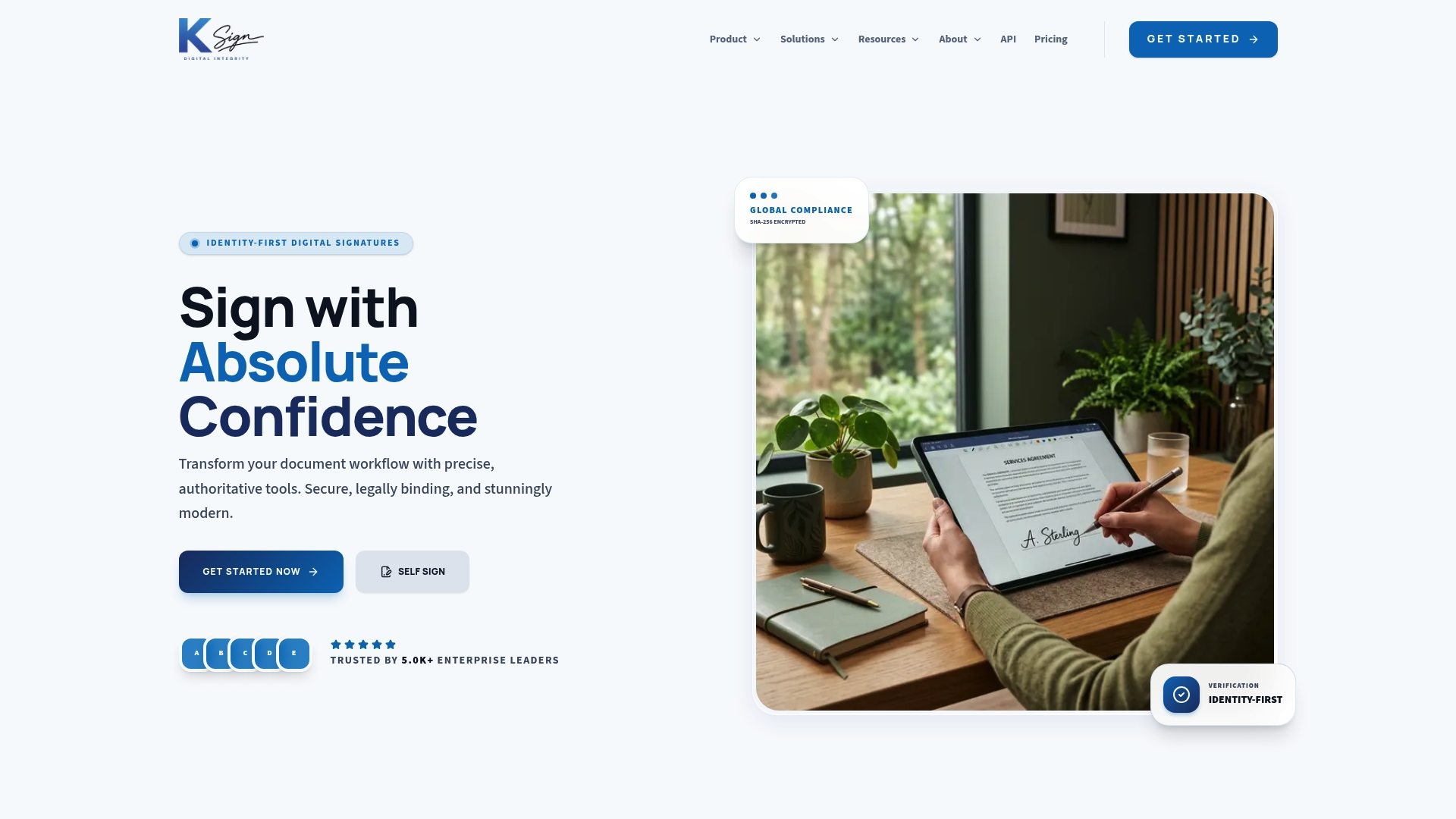
- Form answers generate the engagement letter, reducing transcription errors that creep into manually drafted fee schedules.
- E-signature capture can include a timestamp and audit trail stored with the signed document.
- Deposits or first-month fees may be collected in the same session as the signature, helping to streamline onboarding.
- Templates tailored for industries help avoid starting from a blank page for each new client.
Practices currently juggling Word templates, email, and a separate payment link can see our pricing plans to start building an engagement letter workflow that matches how bookkeeping onboarding actually works.
FAQ
How do I draft a bookkeeping engagement letter?
Start from a template that already includes scope, fees, client responsibilities, confidentiality, and termination clauses, then adjust the wording to match your actual services and billing method. Professional guidance recommends documenting agreed terms in a signed letter and reviewing it at least annually.
Where can I find a free bookkeeping engagement letter template?
Sample templates are published by firms such as EAK Accounting Services and other practitioner sites, which show typical sections for scope, fees, and termination. The template earlier in this guide can also be copied directly into Word or Google Docs.
What is an engagement letter in accounting?
An engagement letter is a signed document that sets out the services an accountant or bookkeeper will provide, the fees charged, and each party’s responsibilities. It protects both sides by recording agreed terms rather than relying on a verbal understanding.
Who prepares and signs an audit engagement letter?
The accounting or audit firm drafts the engagement letter, and it is signed by both the firm’s authorised representative and the client’s management. This mirrors how a bookkeeping engagement letter works, with the bookkeeper preparing the terms and the client accepting them in writing.
Do I need a new engagement letter every year?
Re-confirming terms annually is considered good practice, since fees, scope, or software access can change between periods. Reissuing the letter keeps the written record current rather than relying on an agreement that may be years out of date.
Sources
- Preparation, compilation, and review engagements (AICPA illustrative engagement letter guidance)
- What kind of records should I keep | Internal Revenue Service
- EAK Accounting Services bookkeeping engagement letter template