
The main types of freight service agreement documents used in Australian logistics are: bill of lading, sea waybill, air waybill, consignment note, freight forwarding agreement, freight carrier agreement, charterparty, contract of affreightment, spot/single-shipment contract, rate confirmation, delivery order, proof of delivery, warehouse receipt, and multimodal transport document. Each serves a distinct legal function, and choosing the wrong one, or omitting one entirely, creates real liability exposure.
Here is a quick-reference shortlist with one-line definitions:
- Bill of lading (BOL): Receipt, contract of carriage, and (if negotiable) title document for sea freight.
- Sea waybill: Non-negotiable sea freight receipt; faster release at destination, no original required.
- Air waybill (AWB): Non-negotiable contract of carriage and receipt for air freight.
- Consignment note: Road and rail freight receipt and carriage contract; domestic variants governed by Australian state law, international road variants by CMR.
- Freight forwarding agreement: Governs the forwarder’s scope, subcontracting rights, customs responsibilities, and liability.
- Freight carrier agreement: Standing contract between shipper and carrier setting rates, service standards, and liability allocation across multiple shipments.
- Charterparty: Contract for hiring a vessel (voyage or time charter); used for bulk or full-vessel bookings.
- Contract of affreightment (COA): Volume commitment contract for multiple voyages over a period, without chartering the vessel.
- Spot/single-shipment contract: One-off agreement binding a single load’s commercial terms; spot contracts offer flexibility but price volatility compared to term arrangements.
- Rate confirmation: Written confirmation of agreed freight rates for a specific shipment or lane; often accompanies or is referenced by a BOL.
- Delivery order: Instruction from the shipper or carrier authorising release of goods to the consignee or a nominated party.
- Proof of delivery (POD): Signed acknowledgement that goods were received in the stated condition.
- Warehouse receipt: Document issued by a warehouse operator confirming receipt and storage of goods.
- Multimodal transport document: Single document covering carriage across two or more modes under one contract.
The execution checklist and sample clauses are in the signing and templates sections below, illustrating how to structure standard terms and conditions in freight service agreements. The decision matrix for choosing the right document set is in the “How to choose” section.
Table of Contents
- What are the main freight service agreement documents?
- How do freight documents interact across the supply chain?
- How do Incoterms affect which freight documents you need?
- Template checklist and sample clauses for freight agreements
- How to choose the right freight document set
- Key takeaways
- The mistake that costs Australian shippers the most
- Ksign makes freight agreement documentation faster and more reliable
- Useful sources and further reading
What are the main freight service agreement documents?
Every freight shipment generates at least one document, and most generate several. The practical distinction that matters most is between transactional documents (created for a single shipment: BOL, AWB, delivery order, POD) and relationship contracts (standing agreements that govern multiple shipments: freight carrier agreements, master services agreements, contracts of affreightment). Transactional documents like bills of lading can act simultaneously as a receipt, a contract of carriage, and a negotiable title instrument depending on their form, while relationship contracts set the framework within which those individual documents operate.
Bills of lading and waybills
A negotiable bill of lading is the most powerful document in sea freight. It transfers title to the goods when endorsed and delivered, which means the holder of the original can claim the cargo at destination. Banks rely on it for letters of credit. A straight (non-negotiable) bill of lading names a specific consignee and cannot be transferred. A sea waybill is always non-negotiable: the consignee is released on proof of identity without presenting an original, which speeds port release considerably for trusted trading partners.
The air waybill is always non-negotiable. It travels with the cargo and serves as the contract of carriage between shipper and airline or freight forwarder. Under the Montreal Convention, it also sets the liability framework for international air cargo.
Consignment notes
For domestic road freight in Australia, the consignment note (often called a “connote”) is the primary document. It records the parties, cargo description, pickup and delivery addresses, and agreed terms. Internationally, road freight between countries that have adopted the CMR Convention uses a CMR consignment note, which carries its own liability regime. Australian domestic road transport liability is governed by the Australian Consumer Law and relevant state transport legislation rather than CMR.
Freight forwarding agreements
A freight forwarding agreement defines what the forwarder will do on the shipper’s behalf: booking cargo space, preparing documentation, arranging customs clearance, and coordinating delivery. Forwarder agreements should explicitly address subcontracting rights, insurance handling, and customs clearance responsibilities because the forwarder often engages carriers, customs brokers, and warehouse operators as sub-contractors, each with their own liability terms. In Australia, forwarder liability is typically limited by the Australian Freight Forwarders Association (AFFA) standard trading conditions unless the parties agree otherwise in writing.
Freight carrier agreements
A freight carrier agreement (sometimes called a transportation agreement or carrier services agreement) is a standing contract between a shipper and a carrier. It governs the ongoing commercial relationship: rates, service standards, liability allocation, and claims procedures, and once in place it supplements or modifies the terms of individual bills of lading. Without a carrier agreement, each shipment’s terms default to whatever is printed on the BOL or waybill, which is usually the carrier’s standard conditions, not yours.
Charterparty and contract of affreightment
A charterparty hires a vessel or a defined portion of it. A voyage charterparty covers a single voyage; a time charterparty hires the vessel for a period. Both are used for bulk commodities, project cargo, or full-vessel bookings where a standard liner bill of lading is insufficient.
A contract of affreightment commits a carrier to lift a specified volume of cargo over a defined period across multiple voyages, without chartering the vessel. It suits exporters with predictable volumes who want price certainty without the operational complexity of a charterparty.
Spot contracts, rate confirmations, and load tenders
Rate confirmations and load tenders bind a single shipment’s commercial terms after negotiation and are commonly referenced by or attached to bills of lading. A spot contract is a one-off agreement for a single shipment, offering pricing flexibility at the cost of rate volatility. A load tender is the shipper’s formal offer of a load to a carrier; acceptance creates a binding obligation.
Broker-carrier and co-broker agreements
In brokered freight, the document set expands to include broker-carrier agreements, shipper-to-broker agreements, co-broker (broker-to-broker) agreements, NDAs, and hold harmless agreements. Each agreement allocates liability between the intermediary layers. A broker-carrier agreement, for instance, sets the carrier’s obligations to the broker and typically requires the carrier to maintain specified insurance levels.
Delivery order, proof of delivery, and warehouse receipt
A delivery order instructs a carrier or warehouse to release goods to a named party. It is commonly used when cargo is split or when a buyer needs to collect goods before the original BOL has arrived. A proof of delivery is the signed acknowledgement at the point of handover, capturing condition, quantity, and time. A warehouse receipt is issued by a storage operator and can, in some jurisdictions, be negotiable (a warrant), enabling the goods to be pledged as security.
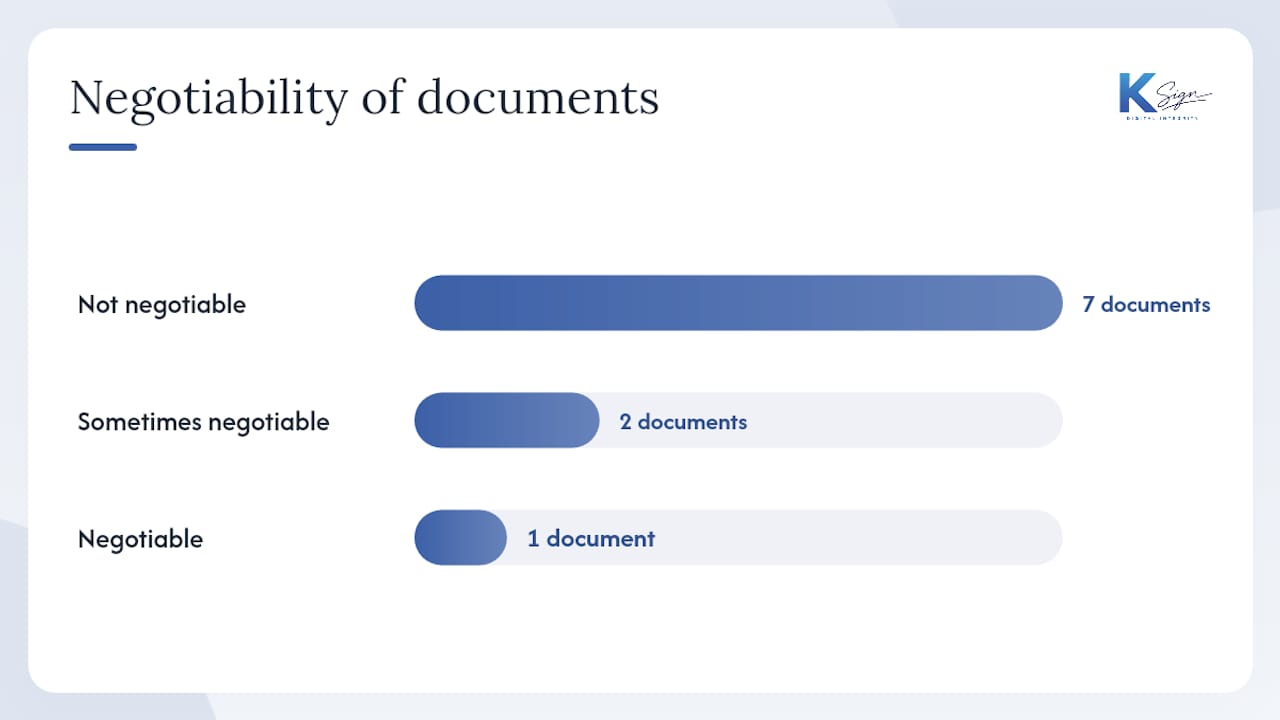
| Document | Mode | Negotiable? | Issued by | Primary legal effect |
|---|---|---|---|---|
| Negotiable BOL | Sea | Yes | Carrier/forwarder | Receipt + contract of carriage + title |
| Sea waybill | Sea | No | Carrier/forwarder | Receipt + contract of carriage |
| Air waybill | Air | No | Carrier/forwarder | Receipt + contract of carriage |
| Consignment note | Road/rail | No | Carrier | Receipt + contract of carriage |
| Charterparty | Sea | No | Shipowner/broker | Contract for vessel hire |
| Rate confirmation | All modes | No | Carrier/broker | Binding rate and terms for one shipment |
| Delivery order | All modes | No | Shipper/carrier | Release instruction |
| Proof of delivery | All modes | No | Consignee | Delivery acknowledgement |
| Warehouse receipt | Storage | Sometimes | Warehouse | Receipt + storage contract |
| Multimodal transport document | Multimodal | Sometimes | MTO | Single contract across modes |
How do freight documents interact across the supply chain?
Understanding the choreography between documents is where most execution errors occur. The flow for a typical international sea shipment looks like this:
- Booking and rate confirmation: The shipper or forwarder negotiates rates and the carrier issues a rate confirmation or booking confirmation. This document binds the commercial terms for that shipment.
- Bill of lading issued: Once cargo is loaded, the carrier issues the BOL. If a freight carrier agreement is in place, its terms supplement or override the BOL’s printed conditions. The BOL references the rate confirmation by booking number.
- Delivery order: When the consignee is ready to collect, the shipper or bank (if the BOL is under a letter of credit) issues a delivery order to the carrier or terminal, authorising release.
- Proof of delivery: The carrier or delivery agent captures the consignee’s signature and records any exceptions. This document closes the liability loop.
- Invoice and payment: Freight charges are invoiced against the agreed rate confirmation. Any accessorials (detention, storage) are added at this stage.
Where a master services agreement (MSA) is in place, it sits above all individual shipment documents. The MSA sets the liability framework, insurance obligations, and dispute resolution process; each BOL or rate confirmation is a transaction under that umbrella. A mismatch between the MSA and a BOL, such as different liability caps or conflicting claims time bars, creates genuine legal uncertainty.
For brokered shipments, the chain is longer: shipper contracts with broker (shipper-broker agreement), broker contracts with carrier (broker-carrier agreement), and the carrier issues the BOL. Liability can fragment across these layers. The practical risk is that the shipper’s contract with the broker may not mirror the broker’s contract with the carrier, leaving gaps in cover.
Common mismatch risk points:
- Declared value on the BOL differs from the value stated in the carrier agreement.
- Rate confirmation is not attached to the shipment file, so accessorial disputes cannot be resolved.
- Forwarder’s subcontracting clause is broader than the shipper’s insurance policy covers.
- Claims time bar in the BOL (often 9 months) is shorter than the time bar in the carrier agreement (often 12 months), and the order of precedence clause is silent.
How do Incoterms affect which freight documents you need?
Incoterms (published by the International Chamber of Commerce) allocate responsibility for arranging carriage, insurance, export/import clearance, and risk transfer between buyer and seller. The Incoterm chosen directly determines which party needs to hold or control specific freight documents.
- EXW (Ex Works): The buyer arranges everything from the seller’s premises. The buyer needs the BOL or AWB, export clearance documents, and cargo insurance. The seller’s only document obligation is making goods available.
- FCA (Free Carrier): The seller delivers to a named carrier. For sea freight under FCA, the ICC recommends that parties agree the carrier will issue an on-board BOL to the seller, enabling letter-of-credit compliance. The buyer arranges main carriage and insurance.
- CPT / CIP (Carriage Paid To / Carriage and Insurance Paid To): The seller contracts and pays for carriage to the named destination. Under CIP, the seller must also arrange cargo insurance to at least Institute Cargo Clauses (A) cover. The seller holds the transport document (BOL or AWB) and insurance certificate until payment or credit terms require transfer.
- DAP / DPU / DDP (Delivered at Place / Delivered at Place Unloaded / Delivered Duty Paid): The seller controls carriage and documentation all the way to destination. Under DDP, the seller also handles import clearance, meaning the seller needs the import entry documents as well.
- CIF (Cost, Insurance and Freight): Used for sea freight only. The seller arranges carriage and insurance but risk transfers at the port of loading. The seller provides the BOL and insurance certificate to the buyer. Note that CIF insurance minimum is Institute Cargo Clauses ©, which is narrower than CIP’s (A) requirement.
The practical rule: whichever party arranges carriage controls the transport document until title or risk transfers. Pair your Incoterm choice with a clear clause in the sale contract specifying which freight documents the seller must provide and by what deadline.
Template checklist and sample clauses for freight agreements
Attachment checklist
Every freight agreement or shipment file should include or reference:
- Signed freight carrier agreement or freight forwarding agreement (master document)
- Rate confirmation for the specific shipment or lane
- BOL or waybill template/format agreed between parties
- Insurance certificate or cover note (confirming policy number, insured value, and coverage period)
- Dangerous goods declaration (if applicable: IMO/IMDG for sea, IATA DGR for air, ADG Code for road)
- Loading and unloading instructions (special handling, temperature requirements, stacking limits)
- Contact list (shipper, consignee, forwarder, carrier, emergency contact for hazardous goods)
- Customs and import/export documentation checklist (commercial invoice, packing list, certificate of origin, import permit where required)
Sample clauses
Limitation of liability “The Carrier’s liability for loss of or damage to cargo shall not exceed AUD [X] per shipment or the actual value of the cargo, whichever is lower, unless the Shipper has declared a higher value in writing prior to shipment and paid the applicable ad valorem surcharge.”
Claims time bar “Any claim for loss or damage must be notified to the Carrier in writing within [3] business days of delivery (or, in the case of total loss, within [3] business days of the scheduled delivery date). A formal written claim with supporting documentation must be submitted within [9] months of the date of the bill of lading or consignment note. Failure to comply with these time limits extinguishes the claim.”
Insurance obligation “The Shipper shall maintain cargo insurance covering the full replacement value of all goods in transit under this Agreement. The Shipper shall provide evidence of current insurance upon request. The Carrier is not responsible for arranging transit insurance unless expressly agreed in writing.”
Subcontracting “The Carrier may subcontract the performance of any service under this Agreement to a sub-carrier or agent, provided that the Carrier remains primarily liable to the Shipper for the acts and omissions of any subcontractor as if they were the acts and omissions of the Carrier.”
Accessorials and detention “Detention charges accrue at the rate of AUD [X] per hour (or part thereof) after [2] free hours at pickup or delivery. Accessorial charges not listed in the Rate Confirmation are subject to the Carrier’s published tariff in force at the time of shipment, a copy of which is available on request.”
For single shipments, the limitation of liability and claims time bar clauses can be incorporated directly into the rate confirmation. For term contracts, they belong in the master carrier agreement with the rate confirmation referencing the master document by name and date. Converting these checklist items into a form-to-contract workflow means the right clauses are always attached to the right shipment, without manual copying.
How to choose the right freight document set
The right document combination depends on four variables: shipment frequency, transport mode, cargo characteristics, and whether a broker is involved.
Decision checklist:
- Single shipment or spot booking? Secure a rate confirmation plus BOL or waybill plus POD plus insurance certificate as a minimum.
- Recurring volumes with the same carrier? Negotiate a freight carrier agreement and use rate confirmations for individual lanes.
- International shipment? Add a freight forwarding agreement (if using a forwarder), confirm Incoterm alignment, and check whether a negotiable BOL is required for payment terms.
- High-value or hazardous cargo? Declare value on the transport document, attach a dangerous goods declaration, and confirm insurance covers the full replacement value.
- Brokered shipment? Confirm both the shipper-broker and broker-carrier agreements are in place and that liability flows consistently through both.
- Need negotiable title? Use a negotiable BOL. For all other sea freight, a sea waybill is faster and simpler.
- Full vessel or bulk cargo? A charterparty is required. For volume commitments without vessel hire, use a contract of affreightment.
| Mode | Typical document pack |
|---|---|
| Domestic road | Consignment note + rate confirmation + POD |
| International sea (general cargo) | BOL or sea waybill + rate confirmation + insurance certificate + customs documents |
| International sea (bulk/full vessel) | Charterparty or COA + BOL + insurance certificate |
| International air | Air waybill + rate confirmation + insurance certificate + customs documents |
| Rail (domestic) | Consignment note + rate confirmation + POD |
| Multimodal | Multimodal transport document + rate confirmation + insurance certificate + customs documents |
| Brokered (any mode) | Shipper-broker agreement + broker-carrier agreement + transport document for the mode |
When in doubt, the minimum viable document set is: rate confirmation, transport document (BOL/waybill/consignment note), POD, and insurance certificate. Escalate to a master services agreement or charterparty when shipment value, volume, or complexity justifies the negotiation time. Why transport companies benefit from signed service agreements goes deeper on when a standing agreement pays for itself.
Key takeaways
Choosing the correct freight document set, and executing it properly, is the single most effective way to protect your position in an Australian freight dispute.
| Point | Details |
|---|---|
| Match document to legal function | Use a negotiable BOL only when title transfer or letter-of-credit compliance is required; a sea waybill is faster for trusted consignees. |
| Anchor every shipment to a rate confirmation | Attach the signed rate confirmation to the shipment file so accessorial and detention disputes can be resolved against agreed terms. |
| Set claims time bars explicitly | State the notification period and formal claim deadline in the carrier agreement; missing the time bar extinguishes the claim regardless of merit. |
| Declare cargo value on every transport document | The default Hague-Visby or Montreal Convention caps are often far below actual cargo value; declared value triggers higher carrier liability. |
| Use Ksign to automate document generation | Ksign’s form-to-contract workflow auto-generates freight agreements from booking forms, attaches supporting documents, and captures legally binding e-signatures with a full audit trail. |
The mistake that costs Australian shippers the most
The most common, and most avoidable, error in Australian freight documentation is not the missing clause. It is the mismatched document. A shipper negotiates a freight carrier agreement with a liability cap of AUD 500,000 per shipment, then the carrier issues a BOL with its standard conditions capping liability at the Hague-Visby SDR equivalent, and the carrier agreement contains no order-of-precedence clause. When a claim arises, both parties argue their document governs. The dispute costs more to resolve than the cargo was worth.
The second most common error is the orphaned rate confirmation: the commercial terms were agreed by email, the rate confirmation was never formally signed, and when detention charges appear on the invoice, there is no signed document to reference. Courts in Australia have found binding contracts in email exchanges, but proving the exact terms agreed is expensive and uncertain.
The fix is not more paperwork. It is a tighter workflow. When a booking form drives contract generation, the rate confirmation is embedded in the agreement, the order-of-precedence clause is standard, and the signed document is timestamped and stored before the cargo moves. That is the integrity the documentation chain needs.
Ksign makes freight agreement documentation faster and more reliable
Getting freight agreements signed, attached, and stored correctly is where most small logistics and transport businesses lose time and create risk. Ksign’s contract automation converts a booking form into a fully populated freight agreement, attaches the rate confirmation and insurance certificate, and sends the document for legally binding e-signature in one workflow. No manual copying, no version mismatches, no chasing signatures by email.
For recurring contract carriage, Ksign’s high-volume templates mean the same carrier agreement structure is applied consistently across every shipment, with each rate confirmation generated from the booking data. For proof of delivery, mobile signing captures the consignee’s signature and timestamps the handover on the spot. Every signed document is stored with a full audit trail, giving you verifiable evidence of execution if a claim arises.
Transport businesses that need signed service agreements in place before cargo moves can start with Ksign’s e-signature solution and build the full form-to-contract workflow from there. Try Ksign today at ksign.co.
Useful sources and further reading
For Australian practitioners, these are the primary sources worth bookmarking:
- What Is a Freight Contract? Types, Clauses, and Rules - LegalClarity
- Common Types of Freight Agreements and How to Navigate Them Effectively - Armstrong Transport
- Freight Contracts: Types and How to Manage Them More Effectively? - nVision Global
- Shipping service agreement: Liability and transit insurance | Contractable
- Freight Carrier Agreement — Complete Guide | Contracta HQ
- Freight Forwarding Agreements - Navigating Global Shipments - Transcoast
- Product overview | ksign.co
This article provides general information about freight service agreement documents and is not legal advice. Freight law involves complex interactions between statute, convention, and contract. Confirm the applicable rules and your specific obligations with a qualified Australian transport lawyer or freight consultant before finalising your agreements.